

Published: October 29, 2025 • Updated: November 1, 2025
When Udon Got Tired of Swimming and Learned to Stir-Fry 🔥🍳
In Southern California, most udon noodles are busy soaking in dashi broth, calm, comforting, and quietly telling you to cancel your plans. 🍲
But this Easy Yaki Udon Recipe? That’s udon when it decides it’s tired of swimming. Saucier, smokier, and ready to stir things up. 😏
My version of Yaki Udon with pork is straightforward comfort. Udon noodles, cabbage, corn, and green onions in a quick toss of light soy sauce and avocado oil spray. Easy. Fast. Dangerously good. 🍳
Normally I’d reach for oyster sauce, but low-sodium soy sauce kept this Japanese stir-fried udon noodles dish clean, shiny, and just salty enough to make you forget I called it “light.” ✨
The noodles skip the soup and head straight for the skillet, soaking up every drop of light soy sauce as they mingle with tender pork slices, sweet corn, and bits of cabbage that caramelize just enough to steal the spotlight. 🔥
Yaki Udon is a favorite side or main at Japanese izakayas (pubs) in both the U.S. and Japan, but it rarely takes the spotlight at specialized udon-ya that focus on their signature noodle and broth dishes, which makes cooking this stir fry udon noodles recipe at home even more satisfying. 💫
And here’s a little twist most people don’t know: Yaki Udon wasn’t even supposed to exist. It started as a happy accident in postwar Japan when a chef ran out of soba noodles, grabbed udon instead, and tossed them with soy sauce.
And just like that, a national comfort food was born. Turns out, running out of noodles was the best thing that could’ve happened. 🇯🇵
Technically, Japan isn’t famous for wok cooking, but Yaki Udon borrowed that high-heat stir-fry technique from Chinese cuisine, and thank goodness it did. 🥢
A few seconds over high heat and suddenly the noodles are smoky, glossy, and impossible to wait for. 🍜
People often confuse Yaki Udon stir fry with its thinner cousin, Yaki Soba, but they’re totally different noodles. Udon is thick, chewy, and dramatic, while soba is lean, nutty, and quietly flavorful. Same family, very different dinner parties. 😆
I wouldn’t call one better, just different moods. Some nights call for quiet noodles and calm broth; other nights call for fire, soy sauce, and a little drama in the pan.
I hope your Yaki Udon turns out just saucy enough to make your takeout menu jealous! 😏
Table of Contents
Why You’ll Love This Yaki Udon Recipe 💕
- Quick & Easy – Dinner on the table in about 20 minutes—perfect for weeknights. ⏱️
- Comfort Food with a Twist – All the cozy noodle feels without the broth. 🍜
- Full of Flavor – Soy-sauce caramelized noodles, tender pork, and crisp veggies. 🔥
- Versatile – Swap pork for shrimp, tofu, or chicken for a different spin. 🥬
- Doctor Delicious-Approved – Balanced, satisfying, and lighter than takeout. 🩺

Nutritional Benefits 🌿
This Japanese Yaki Udon Recipe balances cozy comfort with real nourishment. The combination of chewy noodles, lean pork, and crisp veggies makes it satisfying without being heavy.
Pork slices are packed with lean protein and essential B-vitamins that support energy and muscle recovery. It’s what keeps this stir-fry both hearty and light. 🐖
Cabbage adds crunch and fiber while delivering vitamin C and antioxidants that support digestion and immunity. Corn brings natural sweetness and a dose of carotenoids for eye health (Cleveland Clinic – Benefits of Corn). 🌽
Using low-sodium soy sauce helps keep sodium levels in check while still giving that deep umami flavor. A quick toss in avocado oil spray finishes everything off with healthy monounsaturated fats and a glossy, restaurant-style sheen (Harvard Nutrition Source – Avocado Oil Benefits). ✨
In short? It’s comfort food that happens to sneak in some serious feel-good nutrients. 💪
Ingredients for the Best Yaki Udon Recipe 🥢
Serves 2 | Prep Time 5 min | Cook Time 15 min | Total 20 min | Difficulty Easy
- 8 oz frozen udon noodles – Thick and chewy noodles that hold up beautifully in a stir fry. 🍜
- 3 oz thinly sliced pork – Adds rich flavor and protein. 🐖
- 1 cup chopped cabbage – For crunch and fiber. 🥬
- ¼ cup frozen corn – Brings a pop of sweetness. 🌽
- 2 tablespoons green onions – Fresh and bright for finishing. 🌿
- 1 ½ tablespoons low-sodium soy sauce – Umami and balance without overdoing the salt. 🧂
- Avocado oil spray – To coat the pan lightly and prevent sticking. ✨
- Optional narutomaki fish cakes – Classic Japanese touch that adds color and fun.🍥
Step-by-Step Instructions for How to Make Yaki Udon 🍳
1. Gather Your Ingredients
Set out your udon noodles, pork, cabbage, corn, green onions, soy sauce, and avocado oil spray.

2. Heat the Pan
Spray a nonstick skillet lightly with avocado oil and heat over medium-high until shimmering.

3. Add Frozen Udon
Place the frozen block of udon in the pan with 2 tablespoons of water. Cover briefly to steam and loosen.

4. Toss to Separate Noodles
Once they soften, gently stir until no clumps remain and the noodles look glossy.


5. Add the Pork
Move noodles to the side, add the pork, and stir-fry until just cooked through and lightly browned. You can swap for chicken to make a chicken yaki udon recipe.


6. Add Cabbage and Corn
Toss in the cabbage and corn and cook for 2–3 minutes until the edges of the cabbage are caramelized.


7. Add Narutomaki and Soy Sauce
Add the Narutomaki and then pour in the soy sauce and toss well so every strand gets that shiny coating.

8. Garnish and Serve
Sprinkle with green onions, plate it up, and serve immediately while it’s steaming hot and saucy.

Doctor Diana’s Special Tip 🩺
If your udon is sticking together, add a splash of water instead of extra oil—the steam will loosen it while keeping the noodles glossy. For extra depth, a dash of mirin or sesame oil at the end gives the dish a subtle restaurant-style finish without heaviness.
Pro Tips for Perfect Yaki Udon 🍜
1. Use the right noodles — and rinse them well.
If you’re using pre-cooked udon packs, give them a quick rinse in hot water first to loosen the strands and remove excess starch. That’s what keeps them chewy, not gummy once they hit the pan.
2. Don’t skip the sear.
Let the pork (or protein of choice) sizzle untouched for a minute before stirring. That little bit of caramelization adds the deep, smoky flavor that makes Yaki Udon taste like true izakaya comfort.
3. Layer your sauce, don’t dump it.
Add soy sauce, oyster sauce, and mirin gradually, tasting as you go. This lets the noodles absorb flavor evenly instead of turning soggy.
4. Stir-fry on high heat.
Yaki Udon isn’t a simmered dish — it’s a flash fry. A hot pan keeps everything glossy and prevents overcooked vegetables.
5. Add butter for that signature Japanese “kiss.”
The finishing pat of butter melts into the soy base, adding body and a hint of sweetness. It’s the secret to restaurant-style richness.
6. Garnish like you mean it.
A sprinkle of sliced green onion, bonito flakes, or pickled ginger adds aroma, color, and the finishing flair that turns a weeknight dinner into comfort food theater.
What to Serve with Yaki Udon 💛
Yaki Udon is satisfying on its own, but pairing it with the right sides turns dinner into a full Japanese comfort meal. Here are some easy, delicious ideas that balance texture, flavor, and nutrition. 🍱
Japanese Pickles and Miso Soup 🥢
A simple bowl of miso soup and a small plate of tsukemono (Japanese pickles) make the perfect opening act for your noodles. The light saltiness and acidity help cut through the richness of the stir-fry, keeping each bite refreshing and balanced. 😋
Doctor Diana Tip: Fermented foods like miso and pickled vegetables are rich in probiotics that support gut health — a tasty win for your microbiome. 🩺🌿
Tempura Shrimp or Vegetables 🍤
Crispy, golden tempura adds crunch and variety to your meal. You can serve a few shrimp tempura on the side or mix in lightly battered veggies like sweet potato or bell pepper for extra color. The contrast between crispy batter and chewy noodles is pure texture heaven. 🤍
💡 Time-Saver: Use your air fryer for a lighter, faster version that keeps your kitchen grease-free. ⚡
Air Fryer Green Beans 💚
If you prefer a lighter, veggie-forward pairing, these Air Fryer Green Beans are a perfect match. They stay crisp-tender and garlicky – just like the famous Din Tai Fung version, and they balance the umami flavors in Yaki Udon beautifully. 🧄
Bonus: Cook them in Basket B of your dual-basket air fryer while the noodles finish in Basket A. Efficiency and flavor in one go! 🔥
Matcha Ice Cream for Dessert 🍨
Finish strong with a small scoop of matcha ice cream or a refreshing mochi ice cream ball. The slight bitterness of matcha balances the savory meal and cleanses the palate, a subtle, sophisticated way to end your Japanese-inspired dinner. 🌸
Doctor Diana Approved: A little dessert keeps things balanced, food should be nourishing and joyful. 💕
Quick Kitchen Conversion for Yaki Udon Sauce 🧂
Measuring sauces by “a splash” or “a drizzle” can be risky — especially when soy sauce or mirin are involved! For perfectly balanced flavor, check out my How Many Teaspoons in a Tablespoon guide before you start stirring. It’ll help you scale the recipe precisely (and avoid accidental salt bombs). 🧮
If You Loved This Recipe, Try These Too 💕
If this Yaki Udon Recipe hit the spot, you’ll love my Authentic Hot Soba Noodle Soup Recipe 🥢, Chow Mein Recipe (Copycat Panda Express) 🍜, and Hearty Instant Pot Beef Stew Recipe 🍲 — more Doctor Delicious favorites that bring comfort to the table fast!
- Juicy Air Fryer Pork Chops 🍖 – Crispy edges, tender inside, and perfectly seasoned in minutes.
- Crispy Air Fryer Chicken Thighs (Bone-In, Skin-On) 🍗 – Golden, juicy, and packed with flavor.
- Easy Air Fryer Potato Wedges 🥔 – Crunchy outside, fluffy inside, and ready in 30 minutes.
- Easy Air Fryer Asparagus Recipe 💚 – The perfect quick veggie side with that irresistible roasted snap.


Frequently Asked Questions (FAQ)❓
Q: What is Yaki Udon?
Yaki Udon is a Japanese stir-fried noodle dish made with thick, chewy udon noodles tossed in a light soy-based sauce. Unlike soup udon, this version skips the broth and embraces the wok — glossy noodles, smoky edges, and just the right amount of umami. 🍜
Q: What does Yaki Udon taste like?
It’s savory, slightly sweet, and full of umami from soy sauce and the caramelized veggies. The noodles stay chewy while the pork adds a rich, meaty depth — think comfort food with a subtle smoky twist. 🔥
Q: How do you keep udon from getting mushy?
Use medium-high heat and avoid overcooking after adding soy sauce. Quick stir-frying keeps the texture bouncy.
Q: Can I use frozen udon straight from the package?
Yes! That’s the beauty of this Easy Yaki Udon Recipe — just steam it briefly to loosen the noodles before stir-frying.
Q: Can I make Yaki Udon vegetarian?
Absolutely. Swap the pork for tofu or mushrooms and you’ll still get that same smoky umami flavor.
Q: What’s the difference between Yaki Udon and Yaki Soba?
Udon noodles are thick and chewy; soba noodles are thin and made with buckwheat. Yaki Udon is heartier and saucier, perfect when you want noodles with a little drama. 😏


Yaki Udon – Savory Japanese Stir-Fried Noodles 🍜✨
Description
This Easy Yaki Udon Recipe is a quick Japanese stir-fry made with chewy udon noodles, pork, and veggies tossed in a light soy sauce glaze. Ready in 20 minutes!
Ingredients
Instructions
-
Gather Your Ingredients:
Set out udon noodles, pork, cabbage, corn, green onions, soy sauce, avocado oil spray, and optional narutomaki.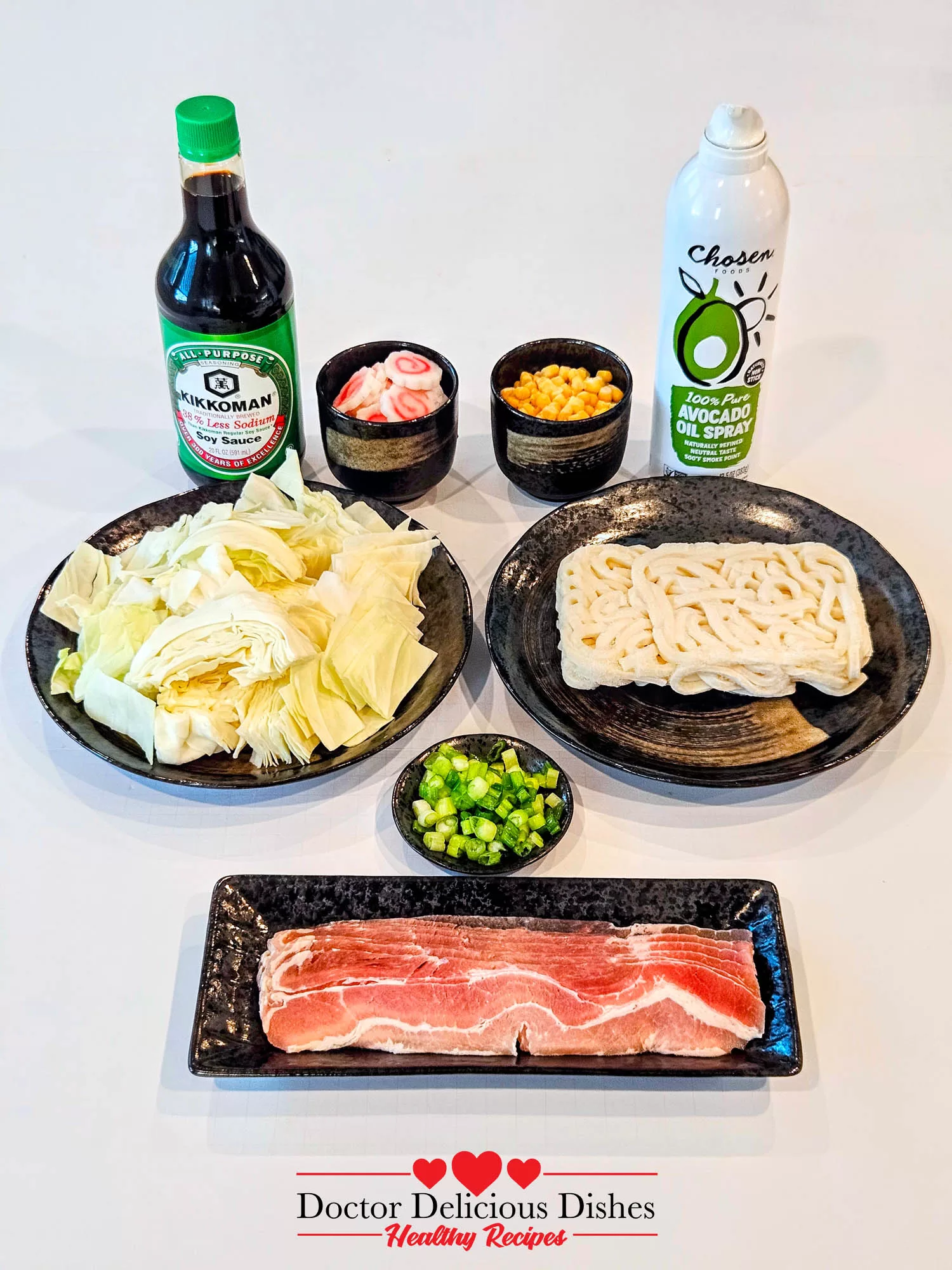
-
Heat the Pan:
Spray a skillet with avocado oil and heat over medium-high.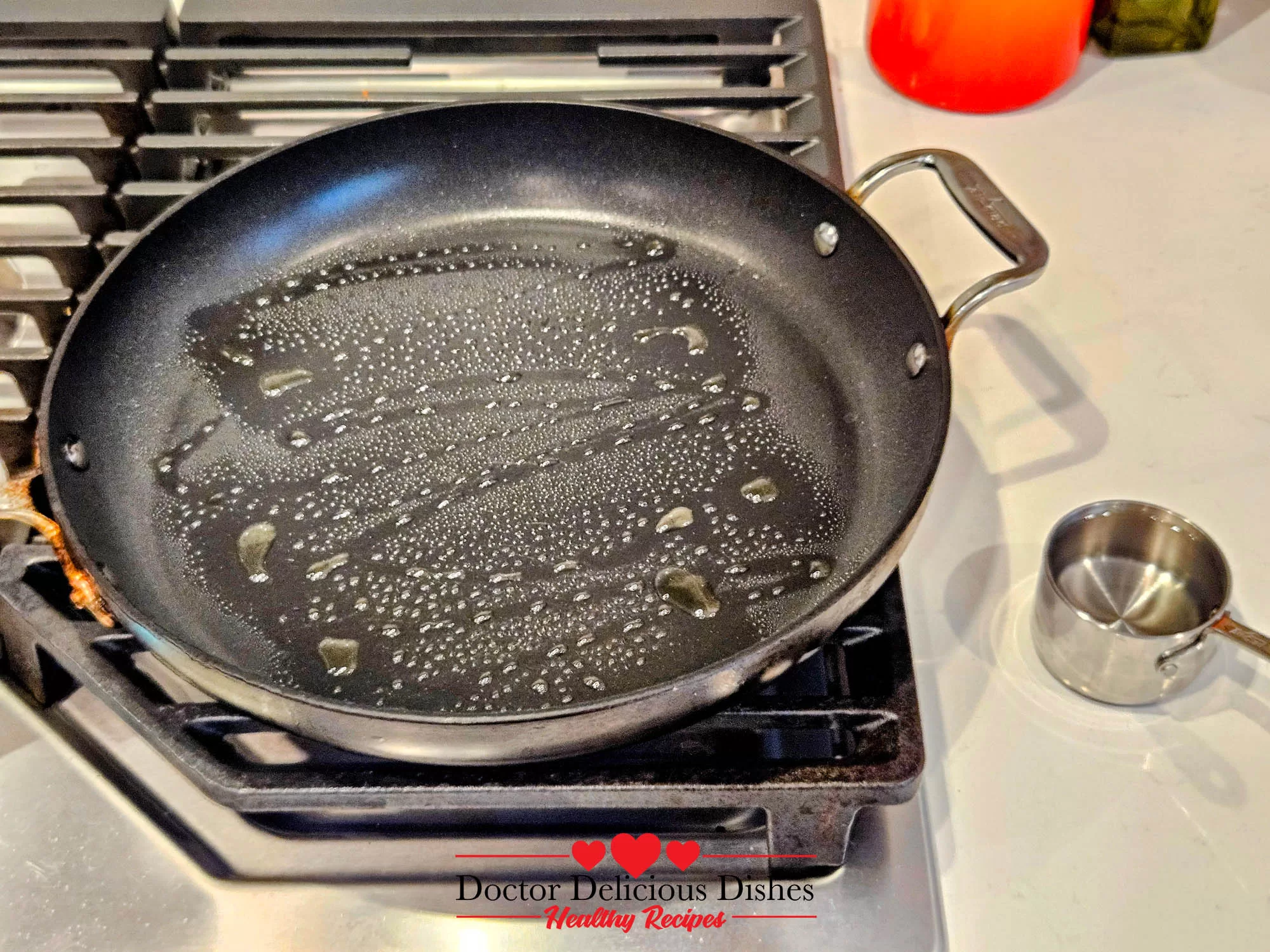
-
Add Frozen Udon:
Add frozen udon and a bit of water; steam to loosen.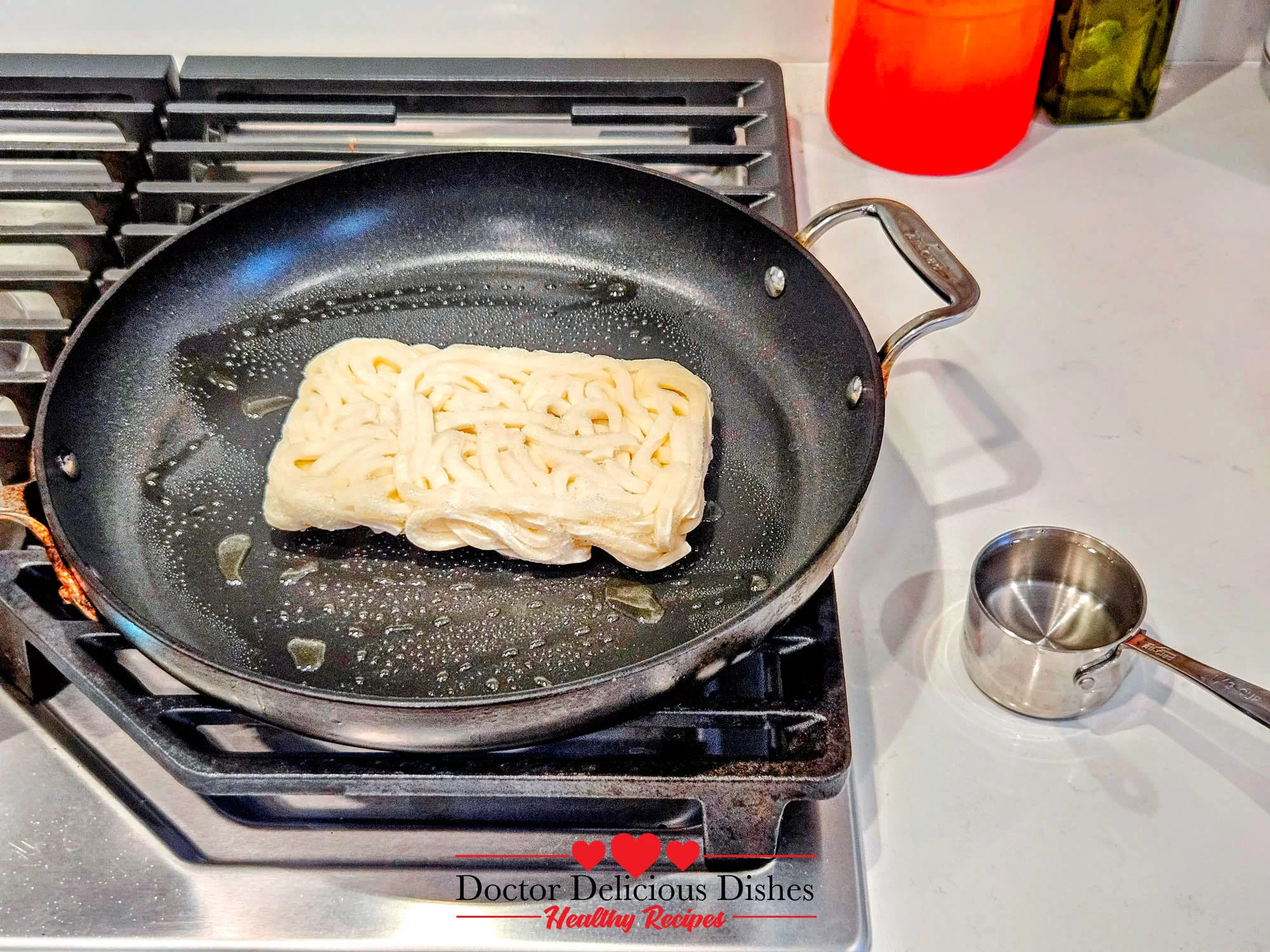
-
Toss to Separate Noodles:
Stir until separated and slightly glossy.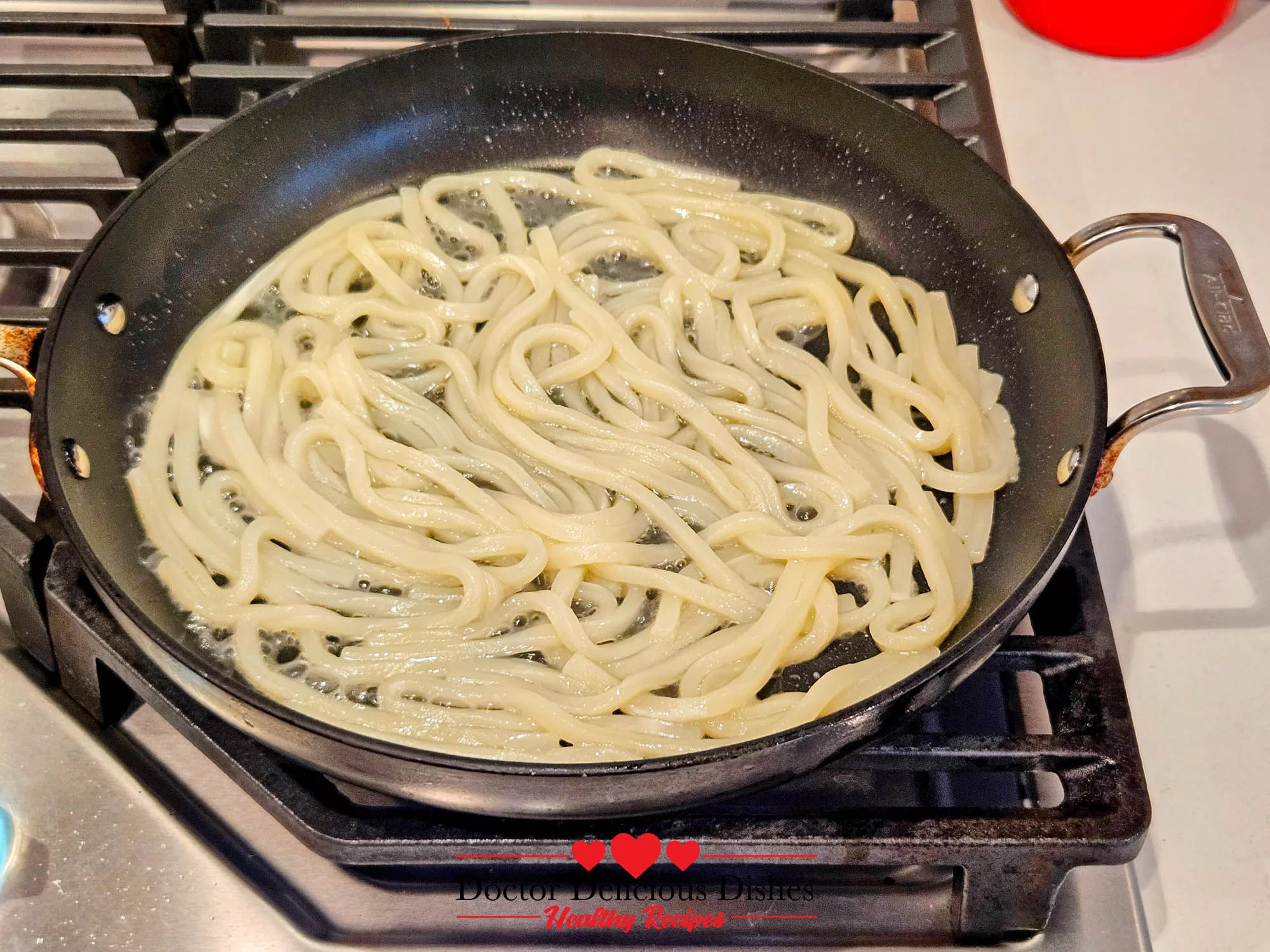
-
Add Pork:
Add pork; cook until browned.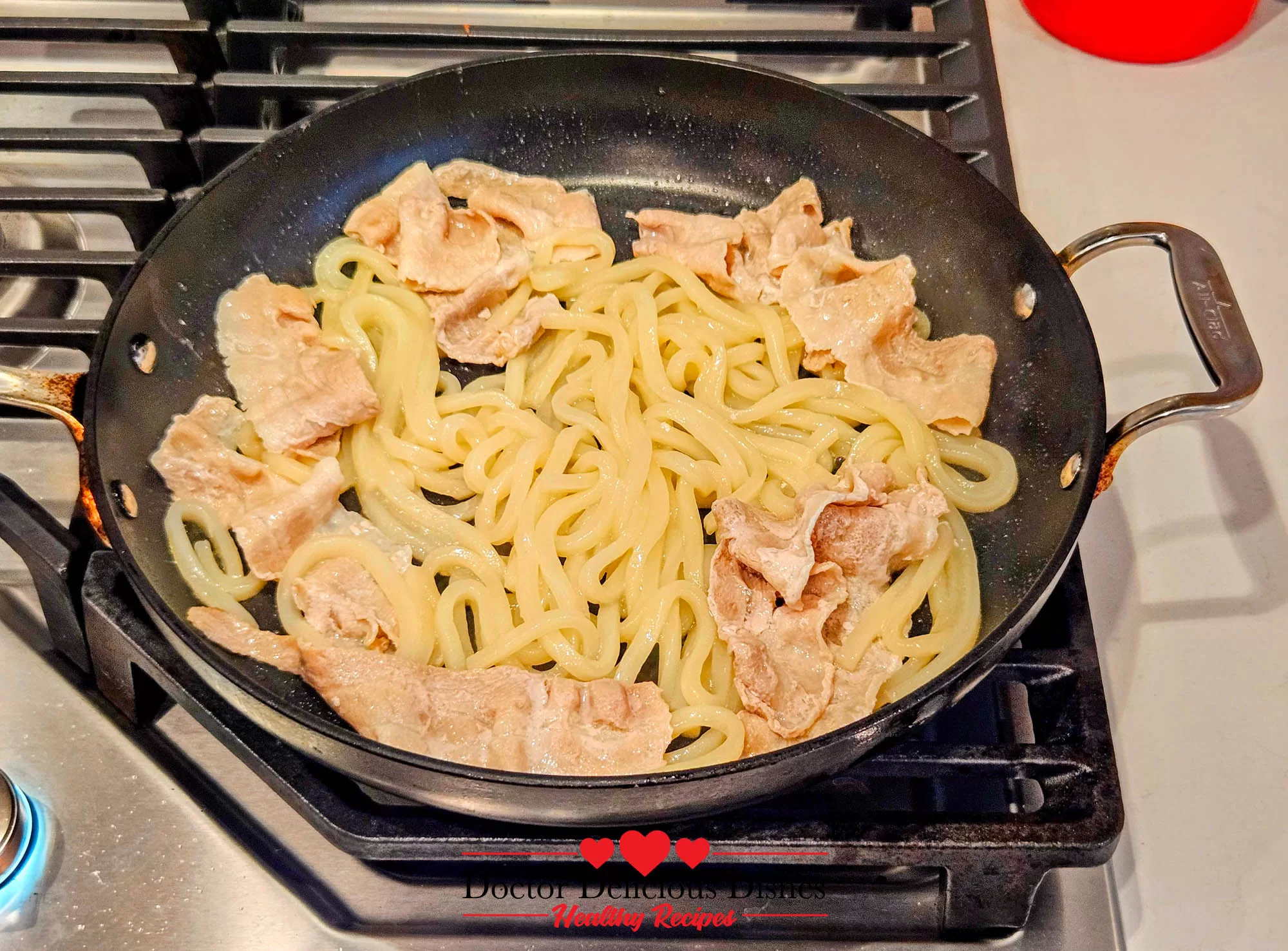
-
Add Vegetables:
Toss in cabbage and corn; stir-fry 2–3 minutes.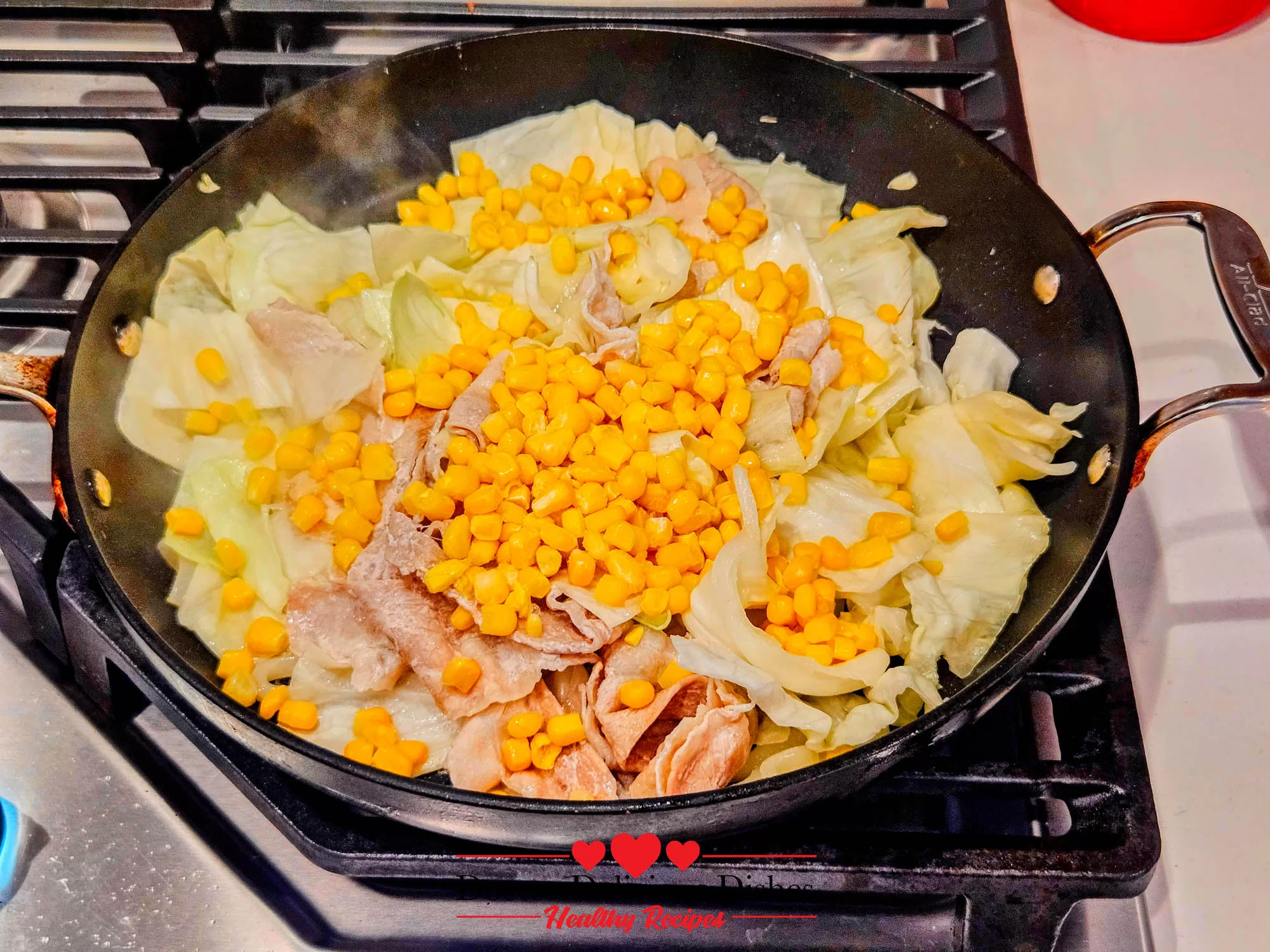
-
Add Narutomaki:
Add soy sauce and narutomaki; mix well.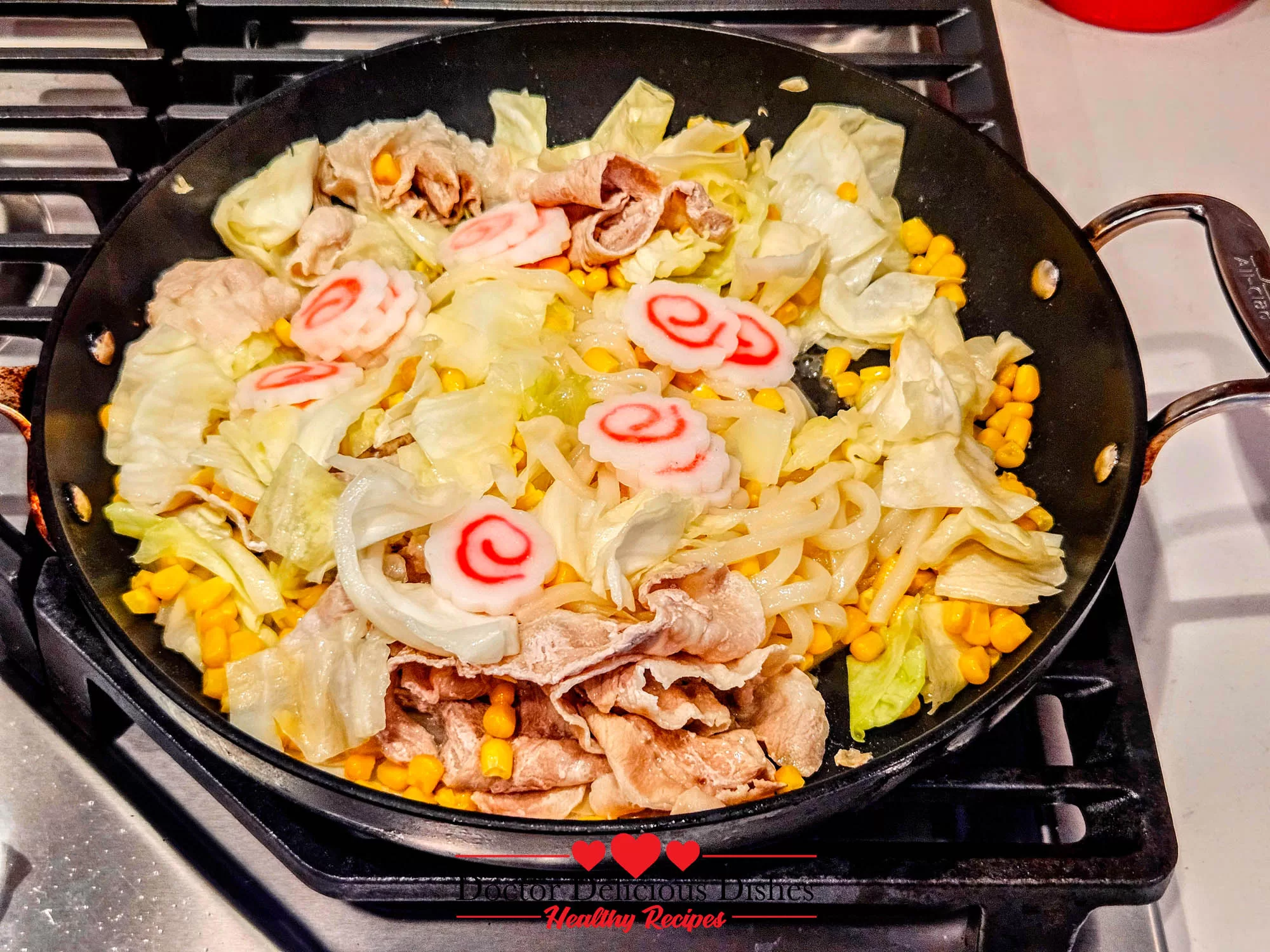
-
Serve and Enjoy:
Garnish with green onions and serve hot.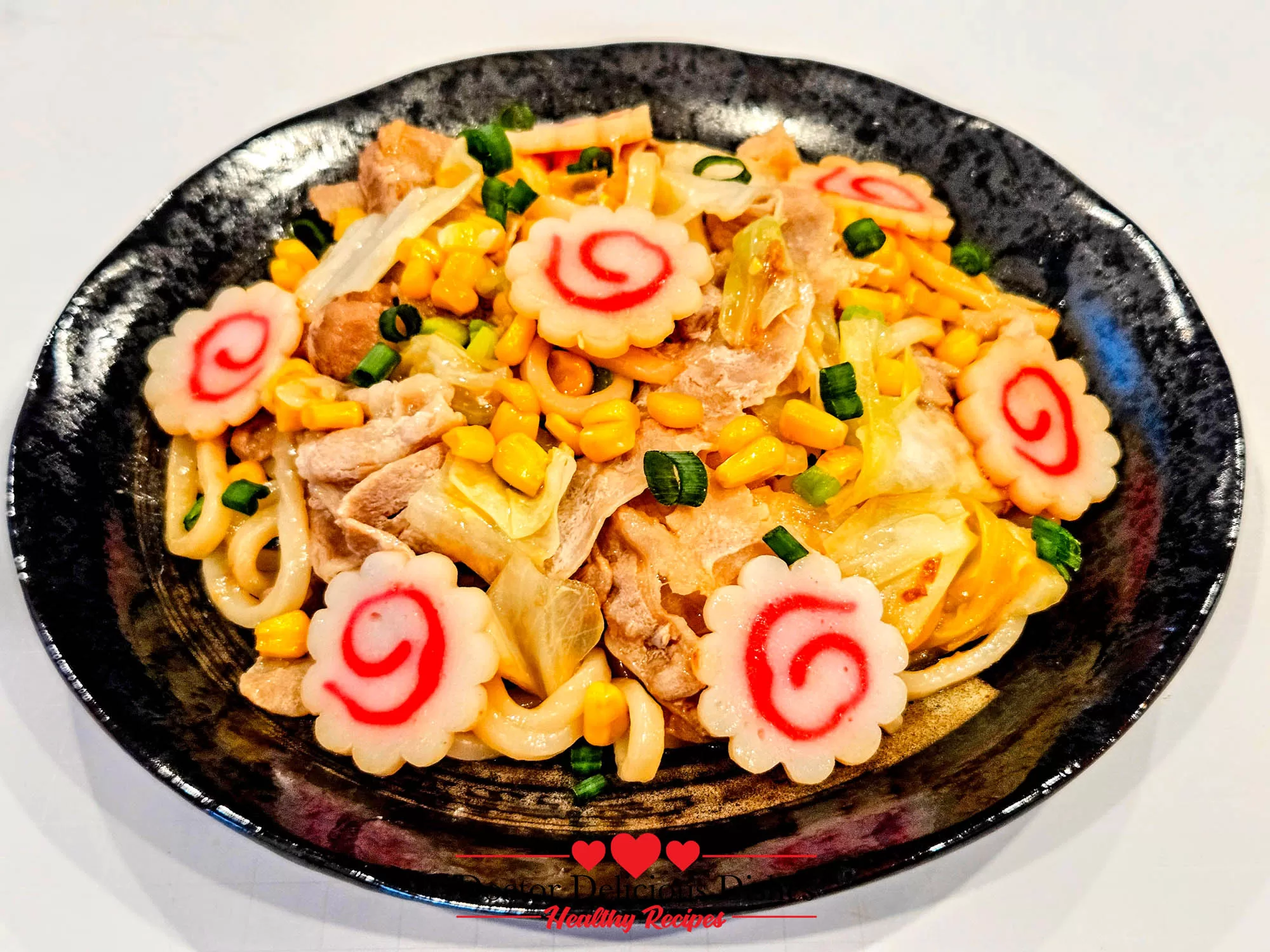
Equipment

As an Amazon Associate, I earn a small commission from qualifying purchases, which helps support my blog at no extra cost to you!
Thank you for your love and support!❤️
Nutrition Facts
Servings 2
- Amount Per Serving
- Calories 670.12kcal
- % Daily Value *
- Total Fat 17.29g27%
- Saturated Fat 3.39g17%
- Trans Fat 0.02g
- Cholesterol 47.34mg16%
- Sodium 684.53mg29%
- Potassium 760.48mg22%
- Total Carbohydrate 99.16g34%
- Dietary Fiber 6.89g28%
- Sugars 8.35g
- Protein 29.65g60%
- Vitamin A 34.81 mcg
- Vitamin C 36.46 mg
- Calcium 126.92 mg
- Iron 2.97 mg
- Vitamin D 0.21 mcg
- Vitamin E 1.68 mg
- Vitamin K 85.27 mcg
- Thiamin 0.61 mg
- Riboflavin 0.28 mg
- Niacin 5.21 mg
- Vitamin B6 0.56 mg
- Folate 86.81 mcg
- Vitamin B12 1.32 mcg
- Phosphorus 435.98 mg
- Magnesium 110.42 mg
- Zinc 3.33 mg
* Percent Daily Values are based on a 2,000 calorie diet. Your daily value may be higher or lower depending on your calorie needs.

Note
- Extra flavor boost: Add a dash of mirin or sesame oil at the end for a richer, restaurant-style finish. ✨
- Storage tip: Refrigerate leftovers for up to 2 days and reheat in a pan with a splash of water to restore that silky texture. 🔥
- Protein swap: Try shrimp, tofu, or chicken instead of pork for an easy twist on this Yaki Udon Recipe. 🍜



